Figma Prototyping Service vs SaaS Build Partner: What London Startups Actually Need
The Figma Confusion That Costs London Startups Time and Money
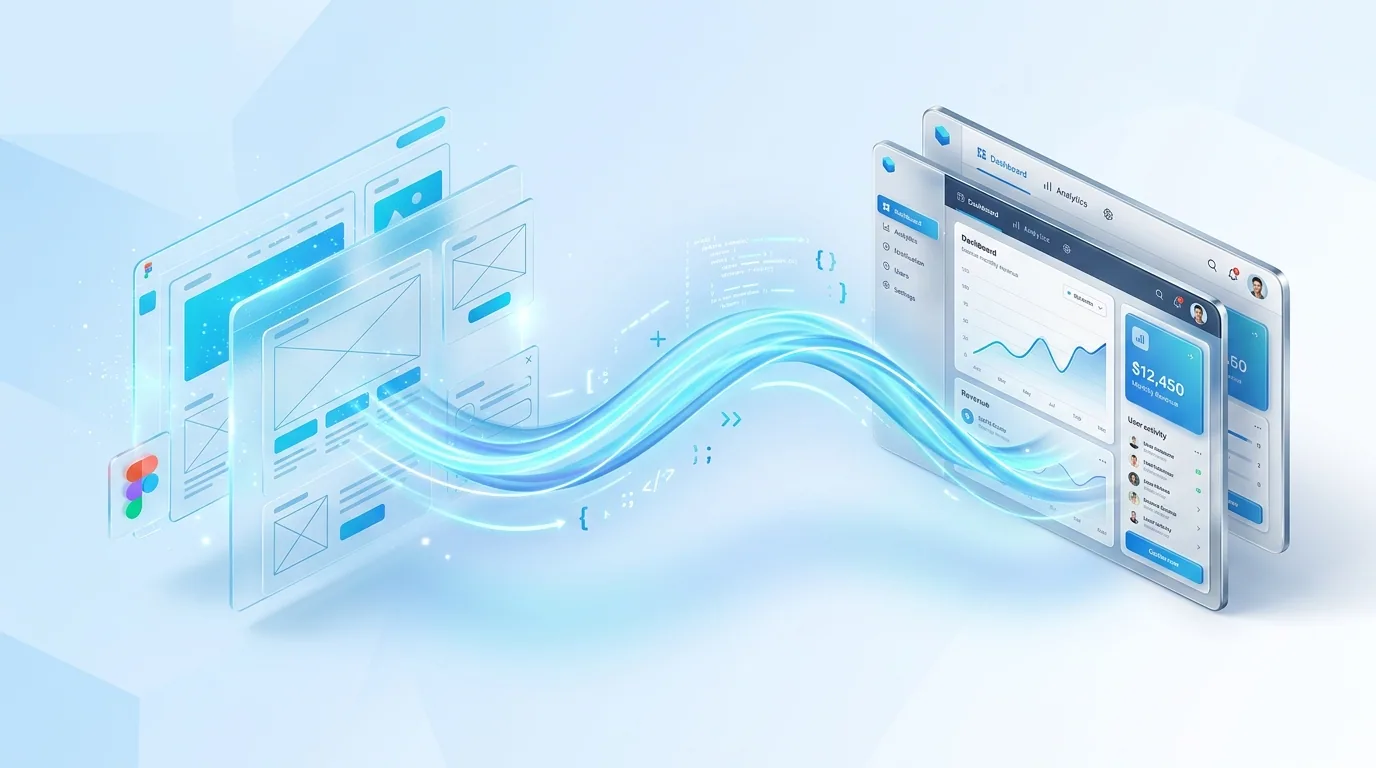
London founders regularly contact us asking for "Figma prototyping services." When we dig into what they actually need, the answer is almost always different — they need a Figma-to-code build partner, not a prototyping service. The distinction matters more than most founders realise, and confusing the two leads to wasted time, misaligned briefs, and occasionally significant budget lost on the wrong service at the wrong stage.
This guide clarifies what each service actually delivers, when you need each one, and how the best London startups sequence them to get from idea to live SaaS product as efficiently as possible.
What a Figma Prototyping Service Actually Does
A Figma prototyping service creates interactive, clickable prototypes within Figma. The output is a high-fidelity simulation of your product — screens connected by interactions, realistic UI components, animated transitions — that behaves like a real application but is entirely contained within the Figma design tool.
Figma prototyping services are typically offered by design agencies, UX consultancies, and product design studios. The deliverable is a Figma file with interactive prototype flows — not deployed software, not real code, not anything a user can sign up for.
When is this valuable? Figma prototyping services are genuinely powerful for:
- User testing: Validating your UX with real users before committing to a build. A prototype is far cheaper to test and iterate than production code.
- Investor demos: Showing investors what the product will look and feel like before the build investment is made.
- Internal alignment: Getting stakeholders aligned on the product experience before design-to-development handoff.
- Design iteration: Rapidly exploring multiple UX approaches to find what works best for your users.
The critical limitation: Figma prototyping services deliver something you cannot launch. Users cannot sign up. Data cannot be stored. APIs cannot be called. When investors say "impressive demo, when can I see the real product?" — a Figma prototype is not the answer.
What a Figma-to-Code Build Partner Does
A Figma-to-code build partner — which is what we are at UIDB — takes your validated Figma designs and converts them into production-quality software. The output is a deployed, functional SaaS application: real React components, real API integrations, real authentication, real deployment infrastructure.
Where a Figma prototyping service creates a simulation, a build partner creates the actual product. Users can sign up. The database stores real data. The billing system processes real payments. This is what you need before you can acquire paying customers.
Key capabilities of a specialist Figma-to-code build partner in London:
- Converting every Figma screen into pixel-accurate React/Next.js components
- Implementing authentication, user management, and multi-tenant architecture
- Integrating billing (Stripe) and subscription management
- Building and deploying the full CI/CD pipeline to production
- Delivering a codebase that your future engineers can extend immediately
Read our detailed breakdown of what our Figma-to-code service includes to understand exactly what we deliver.
The Sequencing That Works: Prototype First, Then Build
The most successful London SaaS launches we have seen follow a clear sequence:
Phase 1: Figma Prototyping (2-4 weeks)
Work with a Figma prototyping service or design agency to create high-fidelity interactive prototypes of your core user flows. Validate these with 5-10 real users from your target market. Iterate based on what you learn. Get to a Figma design you are confident in — not theoretically confident, but validated-with-real-users confident.
Phase 2: Developer Handoff Preparation (1 week)
This step is often skipped and costs time and money. Before handing your Figma file to a development partner, ensure: all components are properly named and organised, responsive layouts are specified for key breakpoints, interactive states (hover, focus, error, empty, loading) are designed for all primary UI elements, and any missing screens or flows are resolved. A Figma file optimised for developer handoff dramatically reduces build time. Ask your Figma prototyping service to prepare the file for developer handoff as part of their deliverable.
Phase 3: Figma-to-Code Build (4-8 weeks)
With validated designs and a clean Figma handoff, a specialist build partner like UIDB can deliver a production SaaS application in 4-8 weeks. The better your Figma prototype, the faster this phase moves. Well-organised Figma files with clear component hierarchies, responsive specs, and designed states typically result in builds that are 20-30% faster than poorly organised ones.
When You Do Not Need a Figma Prototyping Service
Not every London startup needs a dedicated Figma prototyping service before they build. You may be able to skip or compress the prototyping phase if:
- You are an experienced product designer or have one on your team
- You are building a very focused MVP with 5-8 well-understood screens
- You have done extensive customer discovery and have very high confidence in the UX direction
- You are iterating on an existing product with established patterns rather than building from scratch
In these cases, a design-and-build partner who does both in a single engagement — starting from wireframes and moving directly to production code — may be more efficient than engaging a separate prototyping service first.
How to Choose Between London Figma Service Providers
London has excellent options for both Figma prototyping services and build partners. When evaluating:
For a Figma Prototyping Service:
- Ask to see interactive prototype examples — not just static designs
- Ensure they structure Figma files for developer handoff, not just for demo purposes
- Check whether they have experience with B2B SaaS products specifically — the UX patterns differ significantly from consumer apps
- Confirm they will provide a prototype that tests real user flows, not just a visual tour
For a Figma-to-Code Build Partner:
- Review their portfolio of live, production SaaS products — not just mockups or screenshots
- Ask about their component architecture and how they handle design system implementation
- Confirm they build for scalability from day one — not throwaway MVP code that will need a rewrite
- Understand their process for handling design changes during the build (they are inevitable)
For more on evaluating SaaS development agency partners, read our guide on how to choose a SaaS development agency in the UK.
The London Startup Reality
London's startup ecosystem is competitive, and the pressure to launch quickly is real. The founders who move fastest are not those who skip the prototyping phase — they are those who do it efficiently, validate thoroughly, and then partner with a build team that can move from Figma to launched product without delays.
If you have validated Figma designs ready and need a London SaaS development agency to convert them into a production product, book a free scoping session with our team. We will review your Figma files, identify what needs to be resolved before the build starts, and give you a realistic timeline and cost for the full conversion — so you know exactly what you are committing to before you begin.
 Custom SaaS Development
 Web App Development
 API Development